
Find a local volunteer fire department: Contact the volunteer fire department where you live or near you and ask about their volunteer application process. Requirements and procedures can vary by department. Some may post applications online, others require you to visit in person.

Visit the National Volunteer Fire Council’s Make Me a Firefighter website to search for a department in your area!
Requirements: Most departments expect you to meet some basic standards, such as: being at least 18 years old, having reliable transportation, and a valid driver’s license. Some departments will also require a background check.
Training: Alabama expects firefighters (career and volunteer) to complete structured training, acquired through a department-sponsored program. While being certified is not always mandatory just to serve as a volunteer, many departments require it before you can actively respond to calls. Certification requires completing the required training hours and passing written and practical exams (including fire skills and sometimes a hazard materials portion). Once completed, you can be certified by the Alabama Firefighters’ Personnel Standards and Education Commission as a Volunteer Firefighter.
Volunteer Fire Fighter certification course: The course follows NFPA standards and consists of four modules, including classroom and hands-on instruction. Typical prerequisites include physical readiness and often a basic emergency care/CPR component. Training hours: 160 hours of approved training within 24 months is the official minimum for state certification. Topics include: fire behavior, building construction, safety, equipment use, hazardous materials awareness, and more.
🔗 Alabama Fire College Certification Manual
🔗 Volunteer Fire Fighter 160 Module I / Module II / Module III / Hazardous Materials/WMD Awareness & Operations
🌟 A new certification is scheduled to be offered in the Summer of 2026: Fire Support Person. The 2024 edition of NFPA 1010 introduces the “Support Person” role as a way to address volunteer shortages by creating a low-barrier pathway for community members to assist with non-hazardous duties. This role is intended to improve operational efficiency and engagement by allowing a diverse group of people to handle tasks like water supply and communications, thereby allowing certified firefighters to focus on high-risk activities. 🔗Curriculum & Certification Updates
Emergency Medical Training (optional): Many volunteer departments also encourage members to be certified as an Emergency Medical Responder or Emergency Medical Technician (EMT) because medical response is such a large part of emergency calls. Though not strictly required for all departments, this training significantly increases how useful you are on calls and your hiring prospects for career firefighting later. 🔗EMS Programs

Volunteer Rescue Student Tuition Reimbursement Program: Students earning EMT, Advanced EMT, or Paramedic certification at approved Alabama institutions may receive tuition reimbursement if they commit to two years of volunteer fire or rescue service. 🔗Learn more
Serve and Respond: Once accepted and trained, you’ll begin responding to calls, attending meetings, and working with your crew. The time commitment varies greatly by department. Some are very active, others are more rural with fewer calls.
To maintain your status with many departments and qualify for certain benefits (like the Volunteer Emergency Responders Tax Credit), you’ll usually need to: participate in regular training (e.g., weekly drills, monthly sessions, special courses) and complete at least 30 hours of approved training per year.
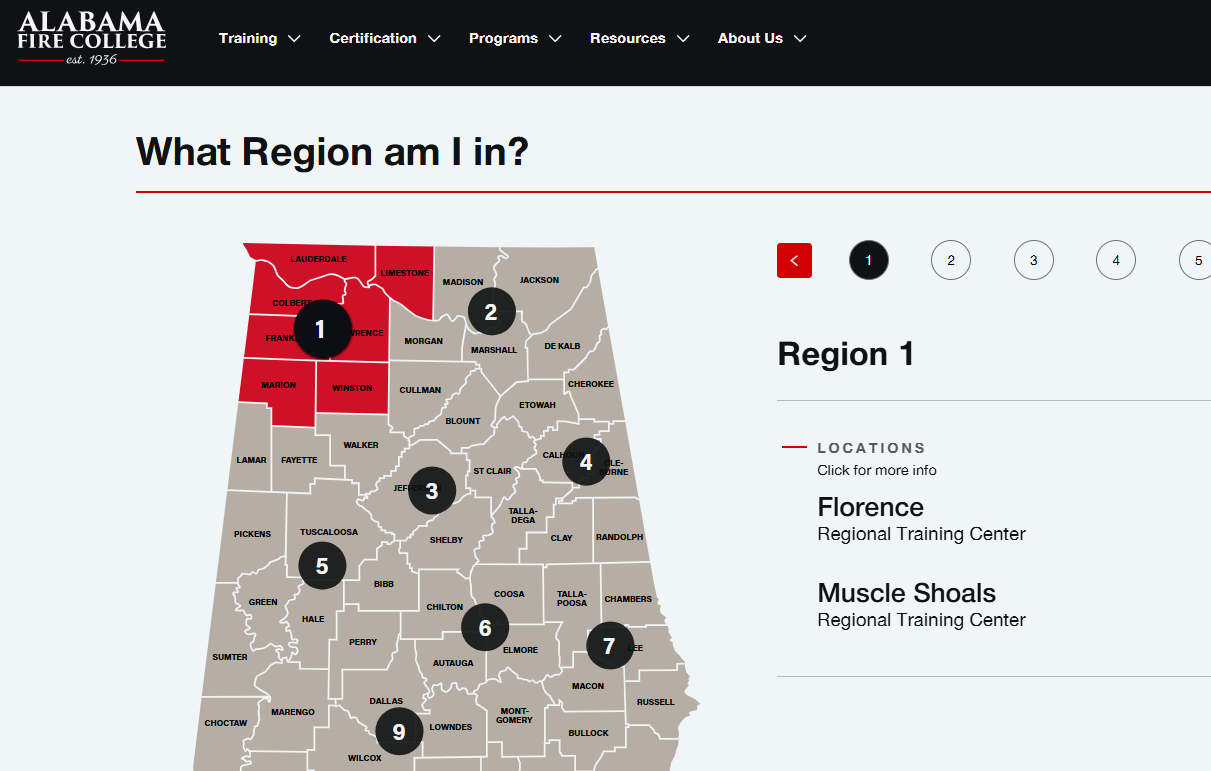
Did you know we have personnel assigned to assist you based on your county? Find your Regional Coordinator on our Regional Services page.