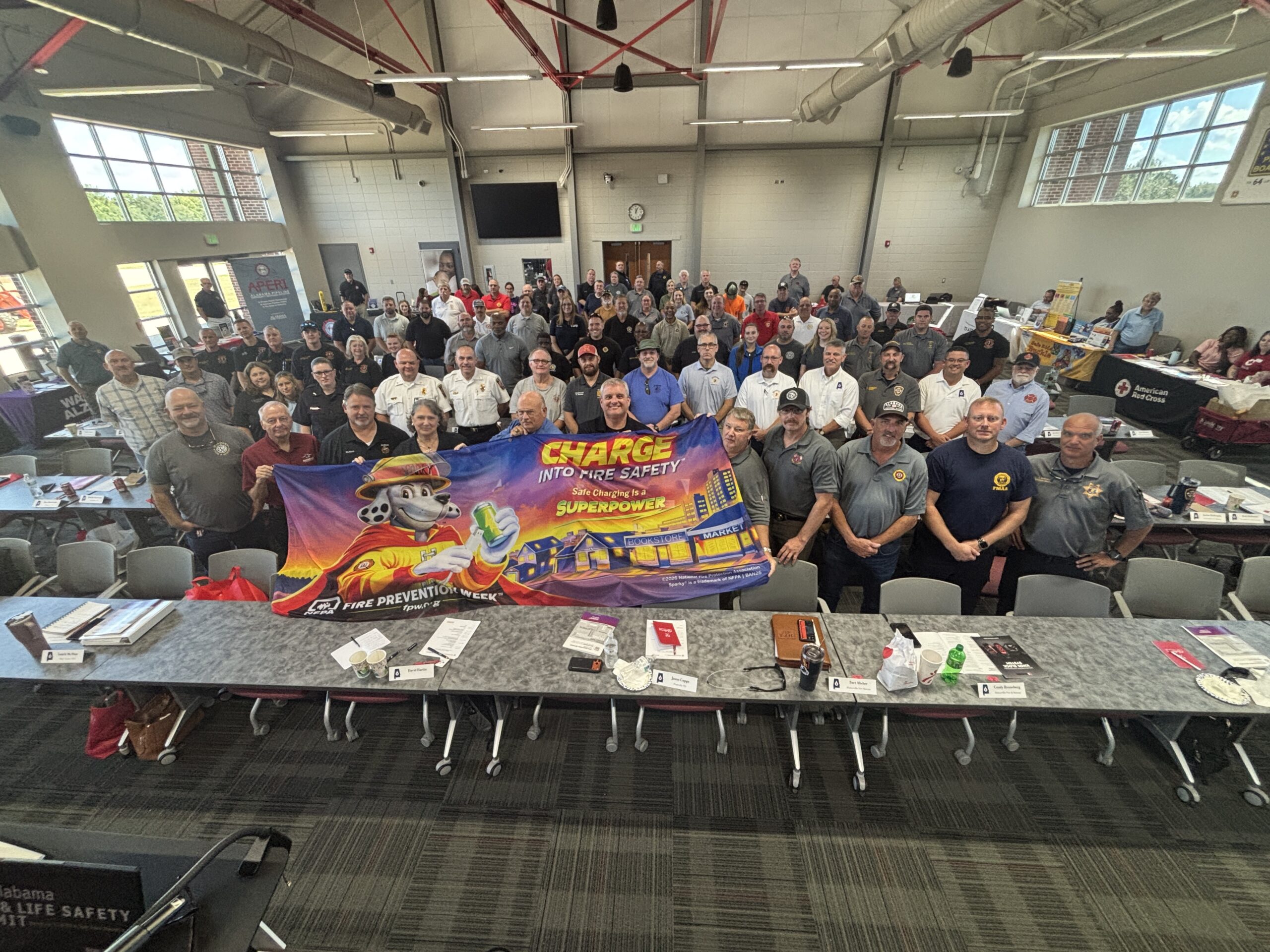
10th Annual Alabama Fire & Life Safety Summit Brings Prevention Leaders Together
Fire and life safety professionals from across Alabama gathered at the Alabama Fire College on September 10, 2026, for the 10th Annual Alabama Fire & Life Safety Summit. Sponsored by the National Fire Protection Association (NFPA) and State Farm Insurance, the Summit brought together approximately 90 attendees from communities across the state to share ideas, strengthen partnerships and connect with resources that can help reduce risk and improve public safety. Alabama was the first state in the country to host a summit of its kind, creating a model for bringing firefighters, public educators, prevention professionals and community partners together around a shared goal: preventing emergencies before they happen.
Over the past decade, the Summit has provided an opportunity for fire service professionals to learn from one another, discover new programs and resources, and build relationships with organizations that can support community risk reduction efforts throughout the state.
Educational sessions
This year’s educational sessions focused on practical strategies for strengthening prevention and outreach efforts. Jessica Curran of the Collierville, Tennessee, Fire Department and Kory Leo of the Louisiana Office of the State Fire Marshal presented “Bridging Gaps and Building Trust: Leveraging Community Partnerships in CRR without Breaking the Budget,” highlighting ways departments can build effective partnerships and expand community risk reduction efforts with limited resources.
NFPA representatives also provided updates on national resources and emerging prevention priorities. Kelly Ransdell presented information on the updated Education Messaging Desk Reference, while Jeremey Criner shared NFPA updates and wildfire prevention strategies.
A panel discussion on Latino outreach featured Julia Sosa of the Tuscaloosa Latino Coalition and David Brasher of the Irondale Fire Department. The discussion explored ways fire departments can build trust, improve communication and strengthen fire and life safety outreach within Latino communities.
Community Partners
A major part of this year’s event was connecting first responders with agencies and organizations that provide assistance in areas ranging from firefighter wellness and cancer support to roadway safety, disaster preparedness, smoke alarms, aging populations and childhood injury prevention. Organizations participating in the 2026 Summit included Alabama First Responder Peer Support, Firefighter Cancer Support Network, Knox, Alabama Department of Transportation/Alabama Traffic Incident Management, Child Trafficking Solutions Project, Safe Kids Tuscaloosa, Alabama Fellowship of Fire Chaplains, GOVS Disaster Response & Preparedness, Alabama Pipeline Emergency Response Initiative, American Red Cross, VitAL Alabama, Alabama Perinatal Quality Collaborative, Area Agency on Aging of West Alabama, Alzheimer’s Association, and Get Alarmed, Alabama.
By bringing these organizations together in one place, attendees were able to make connections that can continue well beyond the Summit and help departments better address the risks facing their own communities.
Celebrating the progress being made in the state
The Summit also featured the presentation of the inaugural Alabama Fire & Life Safety Awards, recognizing individuals and departments whose leadership, education, outreach and community risk reduction efforts are making a lasting impact. Honorees were celebrated for their commitment to prevention and for helping build safer communities across Alabama. (Read about the winners and nominees here.)
The Alabama Fire & Life Safety Summit continues to reinforce that community safety involves much more than emergency response. Prevention, education, partnerships, and access to the right resources all play an important role in reducing injuries, preventing fires and saving lives.
After 10 years, the Summit remains a place where Alabama’s fire service and its community partners can come together, share solutions and continue building a stronger culture of prevention across the state.