
As cold weather conditions threaten to intensify across the state, communities face increased risks related to cold exposure, home heating fires, and hazardous travel conditions. Fire departments play a critical role as trusted public safety leaders in delivering prevention messaging that protects lives, homes, and infrastructure.
This guidance is intended to support fire departments in delivering consistent, evidence-based winter safety education to residents, businesses, schools, and vulnerable populations across their communities.

Winter weather isn’t just inconvenient, it’s dangerous if we’re not prepared. Ready.gov has developed a #WinterReady toolkits to help agencies and departments publicize critical safety reminders: Winter Storm Toolkit
Cold Exposure: A Public Health and Life Safety Risk
Cold exposure is a leading cause of temperature-related fatalities during winter months. Prolonged exposure to low temperatures can result in hypothermia, frostbite, and other life-threatening medical emergencies. Vulnerable populations, including older adults, children, individuals with medical conditions, and those without reliable heating, are at heightened risk.
Community education priorities:
- Promote limiting outdoor exposure during extreme cold
- Encourage layered clothing and proper winter attire
- Emphasize safe indoor heating practices
- Support neighbor check-in initiatives for elderly and at-risk residents
- Promote use of warming centers where available
- Coordinate messaging with community partners who provide services and assistance
Home Heating: Elevated Fire Risk During Winter Months
Home heating is the second leading cause of residential fires, and winter is consistently the peak season for home fire incidents. Improper use of space heaters, fireplaces, furnaces, and alternative heating sources significantly increases fire and carbon monoxide risks.
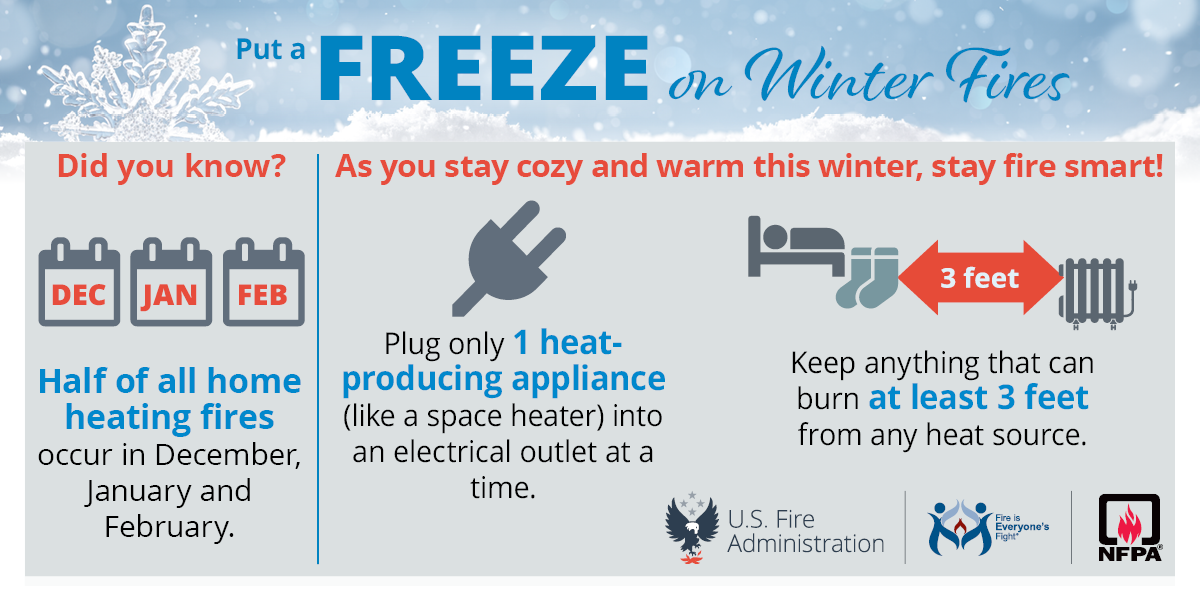
Fire departments responded to an estimated average of 37,365 fires involving heating equipment per year from 2020-2024, accounting for 11% of all reported home fires during this time, and these fires resulted in estimated annual 417 civilian deaths, 1,260 civilian injuries, and $1.2 billion in property damages. (NFPA: https://www.nfpa.org/education-and-research/home-fire-safety/heating)
Fire departments are encouraged to integrate heating safety into inspections, home safety visits, and seasonal campaigns:
- Maintain a 3-foot clearance around all heating devices
- Prohibit use of ovens, grills, or generators as heating sources
- Turn off space heaters when sleeping or leaving the home
- Require annual inspections of heating systems and chimneys
- Promote installation and routine testing of smoke alarms and CO detectors
- Encourage safe fuel storage and generator use

Safety Resources from the Portable Generator Manufacturers’ Association: Local fire departments already do tremendous work educating residents about carbon monoxide and smoke alarms. This Take It Outside® toolkit is designed to accent that effort: plug-and-play materials you can fold into your existing outreach for times when households turn to portable generators during outages, storms, wildfires, or public-safety shutoffs.
Winter Travel: Increased Risk of Emergency Incidents
Winter travel conditions create elevated risks for motor vehicle crashes, exposure emergencies, and delayed emergency response times. Snow, ice, freezing rain, and reduced visibility require proactive preparedness and public awareness.
Fire departments should coordinate winter travel messaging with local emergency management and transportation agencies when possible:
- Discourage non-essential travel during winter storms
- Promote pre-trip planning and route sharing
- Encourage winter vehicle emergency kits
- Advocate for regular vehicle maintenance and fuel readiness
- Emphasize preparedness for roadside emergencies
Winter Weather Driving Tips from the NHTSA: Whether it’s snow, sleet or ice, winter weather can cause extremely dangerous road conditions. In 2023 there were 320 fatal traffic crashes, and an estimated 22,293 injury crashes that occurred when there was snow/sleet conditions at the time of the crash. Preparing yourself – and your vehicle – for winter weather is key.
Prepared communities experience fewer preventable emergencies, reduced fire incidents, and improved resilience during severe winter conditions. Fire departments are uniquely positioned to lead community-based preparedness through trusted relationships and local engagement. Together, through coordinated outreach and consistent messaging, we can reduce winter-related injuries, fires, and fatalities across the state.